Four Life Lessons From Nehemiah–Keeping the Passion Burning in Our Hearts

Mary Lou Retton, the 1984 Olympic Gold medalist and Christian, said “Each of us has a fire in our heart for something. It should be our goal in life to find it and hold on to it.”

What is your passion?

Webster’s Dictionary describes “passion” as:

  1. a strong liking or desire for or devotion to some activity, object, or concept;
  2. the sufferings of Christ between the night of the Last Supper and his death.

Harriet Tubman, the courageous abolitionist, said, “Every great dream begins with a dreamer. Always remember, you have within you the strength, the patience, and the passion to reach for the stars to change the world.”

Any good leader has passion and fire in his/her belly for a cause. Nehemiah in the Old Testament is a leader who definitely had passion. I love learning from him. His name means “The Lord comforts.”

I normally am a pretty passionate person. It is an honor and joy to serve our ministry clients through Blessings Brokers Christian Donor Consulting Firm. When opposition and obstacles get in the way, how can we keep the passion burning in our hearts and minds?

Four Leadership Lessons of Nehemiah we can draw from on how he kept his passion are:

  1. Prayer, fasting, mourning
  2. Participation from others
  3. Protection from opposition—half to watch, half to work
  4. Prompting of revival

Nehemiah was the cupbearer in King Artaxerxes’ court. His position was one of high honor. He was like the Chief of Staff.  Even with his title, he remained humble.

While Nehemiah was on duty, brother Hanani and several men came from Judah, and Nehemiah asked him some questions. I love that Nehemiah was so inquisitive. He was compassionate about his roots.

The Jews had not been back home to Jerusalem in close to 100 years. Their enemies made it virtually impossible to build Jerusalem back after King Nebuchadnezzer had broken the walls down in 586 BC.

The report Nehemiah received was that the survivors were in trouble.

“The wall of Jerusalem is broken down, and it gates have been burned with fire.” –Nehemiah 1: 3b.

Nehemiah sat down and wept when he heard this news. Then he prayed fervently.

Nehemiah was humble. He mourned and fasted for days, then prayed fervently before the Lord. His prayer is one of the most humble, sincere prayers in the Old Testament.

Prayer is the first leadership lesson we learn from Nehemiah to maintain passion. Prayer is the cornerstone of passion and leadership. It’s truly the cornerstone for everything .

President Abraham Lincoln said, “I have been driven many times upon my knees by the overwhelming conviction that I had nowhere else to go.”

Nehemiah heard a vision from God. Nehemiah cast the vision to rebuild the wall of Jerusalem and created passion among the Jewish people.

In Chapter 2 Nehemiah not only casts the vision to rebuild the wall, he humbly enlists participation from others.

They replied, “Let us start rebuilding. So they began this good work.” –Nehemiah 2: 18b.

I love how Chapter 3 of Nehemiah describes all the builders of the walls, including those who didn’t work hard, like in verse 5. One guy named Shallum in verse 12 is mentioned because he used the help of his daughters. Another guy Baruch is mentioned in verse 20 because he zealously repaired his section. He was passionate.

In Chapter 4 we see opposition and Nehemiah’s protection from that opposition. Nehemiah kept praying, stayed humble. “So we rebuilt the wall till all of it reached half of its height, for the people worked with all their heart.” 4:6.

Protection is the 3rd Leadership Lesson we learn from Nehemiah. “Those who carried materials did their work with one hand and held a weapon in the other.” Nehemiah 4: 17.

When we are in the middle of God’s will, we will experience opposition and spiritual warfare. The Lord protects us with wisdom and the Ephesians 6 armor of God. Helmet of Salvation. Breastplate of righteousness—integrity. Belt of Truth. Absolute Truth. Shoes of peace. Shield of faith. Sword of the Spirit. It all faces the front as we face our opposition.

Some of those opposing the rebuilding of the wall began wanting to meet with Nehemiah.

I LOVE how Nehemiah responded. It’s one of my favorite passages.

Nehemiah responded by saying, “I am carrying on a great project and cannot go down. Why should the work stop while I leave it and go down to you?’ Four times they sent the same message, and each time I gave them the same answer.’” –Nehemiah 6:3-4

That is like us as leaders. No matter what the enemy throws at us, will not waiver from His Vision. Don’t let the enemy squelch our passion.
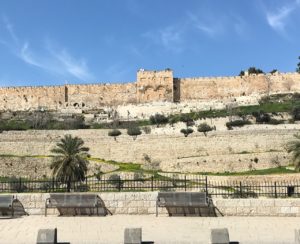
As God guides us and progress is made, the Holy Spirit will Prompt revival, as it did with Nehemiah. Prompting of Revival is the fourth leadership lesson we learn from Nehemiah to keep the passion fueled.

In Chapter 8, the book of Law is read from dawn till noon.

”…and all the people lifted their hands and responded, ‘Amen! Amen! Then they bowed down and worshiped.”—Nehemiah 8:6

One of my life verses comes next. A few verses later in Nehemiah 8:10 they are repenting so much, Nehemiah says, “This day is sacred to our Lord. Do not grieve for the joy of the Lord is your strength.”

The day in Nehemiah was sacred to the Lord because His people repented from sin and turn back to Him. Today is also sacred to the Lord.

Is there anything we need to repent from? Let’s examine our hearts and make any necessary changes in us as He prepares us for our sacred day. The Holy Spirit will change our hearts, refueling our passion even more and prompting revival in countless hearts.

Let’s keep the fuels of passion burning in our hearts for spreading the gospel of Jesus Christ to the ends of the earth.

The good news is that that Jesus Christ is our Ultimate Repairer of Broken Walls and Restorer.

“Your people will rebuild the ancient ruins and will raise up the age-old foundations; you will be called Repairer of Broken Walls; Restorer of Streets with Dwellings.” –Isaiah 58:12

The same God for Nehemiah as the Repairer of Broken Walls is the same God who will continue to lead us passionately in our God-sized visions.

Reflection:

  1. What is your passion?
  2. What obstacles are you facing that are tempting you from coming down off the wall?
  3. Who is participating with you to accomplish the vision?

Be encouraged friend. God is doing a great work through you. Keep standing on the wall as you and others build.

Leave a comment here | No Comments

Journey to the Cross, Part 1–Pouring Perfume

As we prepare for Holy Week next month, my heart is tuned to the vignettes leading up to the most significant event in human history–the death and resurrection of our Savior Jesus Christ. Having been blessed to visit Israel five times over the last 10 years, I’ll try to boost the sensory, experiential journey of the sights, sounds, smells of Jesus’ journey to the cross and tomb. Throughout these weeks and through Holy Week, I’ll bring some of my reflections on the events of Easter.

What a week. What a Holy Week. Isn’t it amazing that the first half of the Gospel of John covers the first 33 years of Jesus’ life, and the last half covers one week?

Just six days before the Passover and Jesus’ triumphal entry into Jerusalem, Jesus was invited to attend a dinner in Bethany in His honor, hosted by  Mary, Martha, and their resurrected brother Lazarus. Can you only imagine what a fun party that would be? For Jesus to have supper with Lazarus, whom Jesus raised from the dead,  AND his two sisters?

“Then Mary took a pint of pure nard, an expensive perfume; she poured it on Jesus’ feet and wiped His feet with her hair. And the house was filled with the fragrance of the perfume.” John 12:3 NIV.

What a beautiful, selfless, sacrificial gift Mary gave Jesus. Of course it was disciple Judas who complained that her gift to Jesus at the party was wasteful and too expensive. Judas was the treasurer and thief-disciple who would betray Jesus in just a few days.

When we give sacrificially some people don’t understand. Like Mary, we may looked at as “over the top” or “too much.” Jesus understood Mary and her heart.

“Leave her alone,” Jesus replied. “It was intended, that she should save this perfume for the day of my burial. You will always have the poor among you, but you will not always have Me.” –John 12:7-8 NIV

Mary got it. She understood the message. Jesus had been trying to tell the disciples that He would die and be raised. (John  10:15-18).

Mary gave Jesus the most valuable possession she had. As we prepare for these weeks leading up to Easter, what valuable possession of yours are you willing to pour out for Jesus and His Kingdom? Whatever we give to Him, He gives much more back to us.

Stay tuned for Journey to the Cross, Part 2.

 Reflect:

–With whom can you relate the most in this stories–Mary, Martha, or Lazarus?  Please comment.

–What are you willing to sacrifice as a beautiful love offering for Jesus for Easter and for your whole life?

Renew:

–“Some of the Pharisees in the crowd said to Jesus, ‘ Teacher, rebuke your disciples!’ ‘I tell you,’ he replied, ‘if they keep quiet, the stones will cry out.'” –Luke 19:39-20 NIV

Recharge:

–How may we live more deeply for Jesus and show love to others?

HIS-Story in the Making: A Teaching from Ezekiel 20 in the First 5 Mobile App

Hi Friend,

I pray your 2020 is off to an incredible start.  Today I have a fun surprise. I’m blessed to do today’s Ezekiel 20 teaching in the Proverbs 31 Ministries First 5 Mobile App. Please check it out and be encouraged. God promises to restore and strengthen each one of us when we rely on Him.

Here is the easy hyperlink or you can read it below: https://app.first5.org/first5

Ezekiel 20:44 (ESV) “And you shall know that I am the LORD, when I deal with you for my name’s sake, not according to your evil ways, nor according to your corrupt deeds, O house of Israel, declares the Lord GOD.”

I love history. I enjoy reading books about history, and when traveling, I make it a point to stop and read historical placards to learn about the city I’m visiting. History is vital for us to learn the roots of our stories, but the most important history, though, is God’s story — His-story — written in His Word. He writes all of history and is the Author of our faith. (Hebrews 12:2)

Israel’s history, like a historical placard, lures us to these spiritual roots, as outlined uniquely in Ezekiel 20. God weaves His-story throughout this passage, reminding the Israelites of their rebellious past and His future plans of restoration.

Israel’s Past Rebellion The historical timestamp in the first verse highlights the year of King Jehoiachin of Judah’s exile in 591 B. C. Ezekiel, who is about 25 years old, prophesies during a time of great confusion after the Babylonians’ exile of the young king. Then and now, prophets emerge in times of crisis to bring God’s message to His people.

Some of the elders of Israel sat before the prophet Ezekiel to inquire of the Lord three times, and God denies their requests. (Ezekiel 20:3) Throughout the passage, the elders of Israel are reminded of their nation’s rampant idolatry in three geographical places:

1. In Egypt (Ezekiel 20: 1-9) The Lord had promised to take the two million-plus Israelites out of Egypt into the Promised Land, “the most glorious of all lands” (Ezekiel 20:6).

2. In the wilderness (Ezekiel 20:10-26) The 40-year journey to the epic Promised Land should have taken 11 days (Deuteronomy 1:2) but was prolonged because of their rebellion.

3. In Canaan, the Promised Land (Ezekiel 20:27-32) Even after entering the Promised Land, the Israelites continued to rebel, (Ezekiel 20:28-31) just as we do today. Yet we see that while God initially rejected Israel’s inquiries, He promised future restoration.

Israel’s Future Restoration Our redeeming Lord promises to restore us as He did for Israel. After Israel’s history of continual sin, idolatry and rebellion, a hopeful pivot begins in Ezekiel 20:33.

The Lord declares with “a mighty hand and an outstretched arm” that He will pour out His wrath, be King over the Israelites and gather them from countries where they are scattered (Ezekiel 20:33-34).

As harsh as this language may seem, Israel is God’s chosen nation, whom He loves, protects and disciplines. (Deuteronomy 14:2; 1 Kings 10:9; Psalm 47:4; 135:4; Romans 11:1-2)

The key verse of today’s teaching declares from our God both His sovereignty and grace in the way He “deals” with us for His name’s sake, not according to our sin or our corrupt deeds. To emphasize God’s sovereignty, eight times within Ezekiel 20 the phrase“I am the LORD” or “I am the LORD your God” is repeated. God loves us; He wants the Israelites and us to know we are His.

As the Lord our God, He promises to restore and strengthen us. Even Ezekiel’s name appropriately means in Hebrew, “God will strengthen.” His name is perfect for a prophet proclaiming a message of uncompromising judgment and later a strong restoration for God’s sake, not Israel’s or ours.

Failure and judgment are not the end of Israel’s story or our story. Our redeeming Lord promises to restore us as He did Israel’s sinful history. May we receive this redemptive gift of Jesus today and let God write His-story in our lives.

Prayer: Lord Jesus, thank You for writing Your story and my life story so graciously. I confess idolatry and rebellion. You are the Great Redeemer. Thank You for loving me, even when I’m lost in rebellious sin like the Israelites. You are sovereign, merciful and mighty. Thank You for making Your story for Your glory and our joy through Your Son Jesus. In Jesus’ name, amen.

More Moments:

Generation after generation, the Israelites had wallowed in the filth of idolatry and rebellion. When the elders inquired of God, He denied them because they still had idols in their lives and hearts. Read More

My Moment:

How have you experienced God’s mercy recently toward your own rebellion or idolatry? Write your redemptive story in the comments below.